

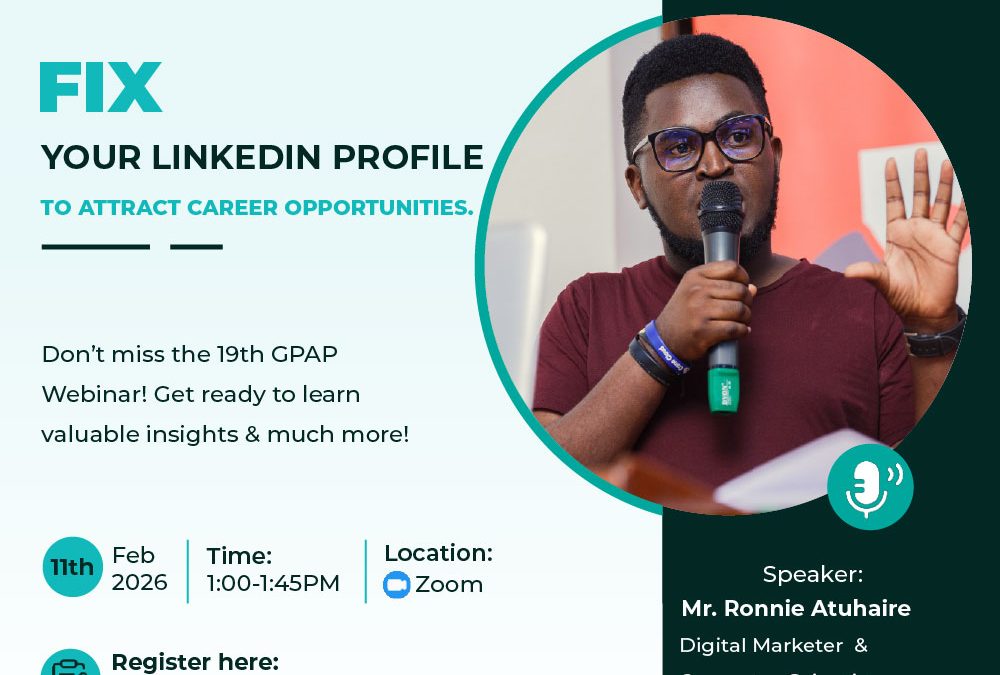
How to Use LinkedIn to Build Your Professional Brand
Most people have a LinkedIn account for a reason. Some want to grow their careers, others want to connect with professionals, and some are looking for their next opportunity. But having an account is not the same as using it well. What matters is how intentional you are about how you show up.
How to Approach LinkedIn with Purpose
LinkedIn is more than just a place to upload a CV. It is a space where people can see what you do beyond what is written on paper. Employers do not only look at your CV. They check your LinkedIn profile to understand how you think, what you share, and how active you are. That is why being intentional matters.
You need a clear direction. A simple plan that shows what you are trying to achieve. For some people, it is getting a job. For others, it is promoting a service or building a personal brand. Once that is clear, the next step is content.
What you share should reflect what you want to be known for. If you are in a certain field, your content should connect to that field. You can share tips, insights, experiences, or lessons from what you are doing. Over time, this helps people understand who you are and what you stand for.
What Makes a LinkedIn Strategy Work
A simple way to look at LinkedIn is through four steps.
First is awareness. People need to know what you do. This can come from posts, articles, videos, or even how your profile is set up.
Then comes proof. It is not enough to say what you do. You need to show it. This can be through testimonials, results, or examples of your work. When people see proof, they begin to trust what you are saying.
Prefer seeing this in action?
If you’d like to see how these concepts were explained step-by-step in the actual mentorship session, watch the full walkthrough below:
Next is engagement. This is how you interact with people. You can ask questions, create polls or respond to comments and messages. This builds relationships and keeps people connected to what you are doing.
Finally, there is conversion. This is where people take action. It could be applying for a program, reaching out for a service, or offering you an opportunity.
For this to work well, your content needs to be clear and consistent. Your visuals should be simple and clear. Your captions should communicate one message at a time. And you should make it easy for people to respond, whether that is through a comment, a message or a link.
There are also tools that make this easier. Design tools help you create visuals. Writing tools help you improve clarity. Scheduling tools help you stay consistent. Analytics tools help you understand what is working and what is not.
When you look at your performance, focus on simple things. How many people are engaging with your posts? Are people saving or sharing your content? Are they clicking on the links you provide? These signals help you understand what to improve. Over time, you begin to notice patterns. Some posts perform better than others. Some formats get more attention. That is what you build on.
LinkedIn becomes easier when you treat it as something you improve with time. You do not need to get everything right at once. You learn by doing, adjusting and improving. That is how your profile stops being just an account and starts becoming a tool that works for you.