
Author: admin

  • STARTUPS IN UGANDA MAKE PROGRESSIVE STRIDES

    STARTUPS IN UGANDA MAKE PROGRESSIVE STRIDES

    Last year, Startup Uganda (represented by Keneth Twesigye of TechBuzz Hub) in association with Ministry of Trade (MTIC), Technical Working Group with private sector representation; PSFU, Innovation Village and Africa Innovation Institute to assess need to startup policies

    As the process went on to take shape, we got to learn of a relative process from the legislators.  with the National Parliamentary youth forum chaired by Hon. Okot Boniface (Northern Youth MP) with his core team including Hon. Phiona Nyamutooro (National Female youth MP), who is on course to move the private members bill on Startup Policy, on a breakfast meeting to review their process of the bill and the draft too

    Whereas having two different processes on going spontaneously demonstrate some light at the end of the tunnel, we are confident that at least the one that follows the ministry’s process has a minimum expectation of one of the following; a startup act, startup policy, strategy or the code of conduct. The different processes have had some bit of support from civil society and development partner organizations like Westminster Foundation for Democracy and Private Sector Foundation with support from Mastercard Foundation

    Here is the subject matter context?

    Under the Ministry of Trade, Industry and Cooperatives, the Government of Uganda is exploring the potential of startups and innovations to spur economic growth and development in the country.

    From a High Level Policy Dialogue on the “Relevance of a Startup Policy in Uganda” hosted by Private Sector Foundation Uganda (PSFU) on May 30th, 2021 at Sheraton Kampala Hotel; the Ministry of Trade Industry and Co-operatives (MTIC) was requested to develop a National Startup Policy by the host on behalf of other stakeholders in the ecosystem. As a result, the MTIC constituted a multisectoral Technical Working Group (TWG) to spearhead the development of interventions geared towards addressing the challenges which inhibit the establishment, sustained performance and growth of startups in Uganda.  The TWG comprises of technical members of MTIC, PSFU, Startup Uganda and The Innovation Village. These entities will carry on activities as guided for this policy reform process. The Nominations were formalized on May 10th, 2022 by the MTIC PS. Again, “The minimum expectations are a law, a policy, a strategy or a code for Startups.”

    Activities undertaken by the Ministry TWG:

    1. Development of the Terms of Reference of the TWG.
    2. Development of the TORs for the Regulatory Impact Assessment consultant were by TWG.
    3. Internal capacity building to appreciate the subject matter of Startups. This resulted to; visiting incubation and innovation hubs like; The Innovation Village, MoTIV, Design Hub, Hive Colab, Women in Technology Uganda, MCI and having some adhoc context analysis from experts of technology from I4policy.
    4. On boarding the RIA Consultant through PSFU.
    5. Conducting the National Stakeholder Consultative Meeting on the Startup ecosystem including government agencies, civil society, development partners and a select of startups
    6. A capacity building retreat of Cabinet Secretariat on the Startup Ecosystem to exposing them to the Startup ecosystem through visiting Startup Hubs.
    7. Undertaking a National Startups consultative meeting across different regions

    Why take such a long and tedious process?

    As opposed to private members bill that is prepared through a parliamentarian’s internal process and later directly to the floor of parliament, the government process differs very much. The government’s framework requires a process that involves a Regulatory Impact Assessment Report development process which provide evidence on the right interventions to address the existing challenges inhibiting growth of the startups in Uganda.  

    And as a way of facilitating public policy dialogue, consulting the parties that are directly affected by the absence of certain interventions is mandatory. The Startup entrepreneurs and innovators, especially young people in different sectors of the economy were consulted about the challenges which inhibit their innovations and the possible actions which Government can take to address these challenges through Regional Consultative meetings.

    From the consultations, the intended objectives and outputs were; finding out the challenges in habiting startup so that a position paper can be develop detailing the required startup business environment to support innovations and ultimately get the Regulatory Impact Assessment Report that include the kind of policy interventions needed for this specific subsector of the economy to develop

    What Next?

    The process is still on going, however, we are in the final stages of the Regulatory Impact Assessment report approval processes from the consultant. We hope that in the next few weeks or months, the report shall be then presented to the cabinet secretariat that would then advise on next steps from the proposals.

  • MANAGING YOUR TAX OBLIGATIONS – TRAINING

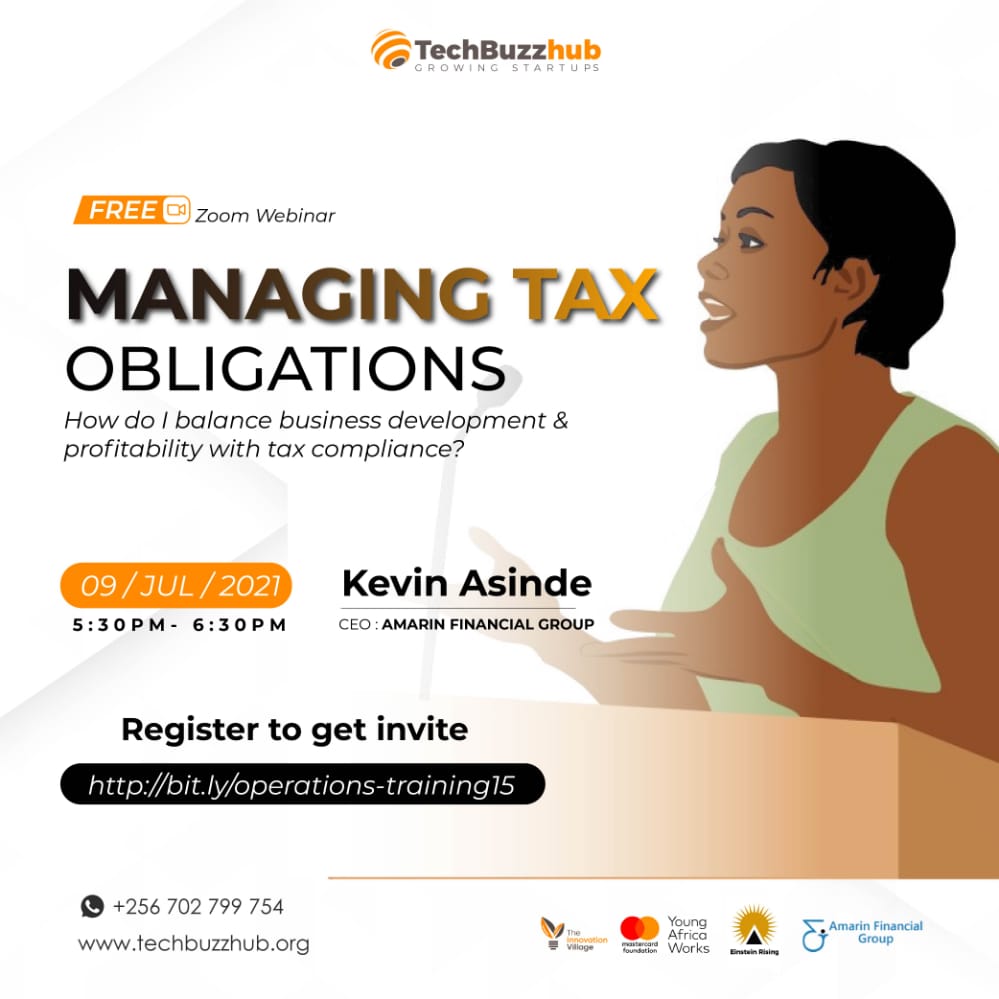
    MANAGING YOUR TAX OBLIGATIONS – TRAINING

    Taxation is one of the ways individuals give back to their government, for providing all the necessary business environment that business is able to run. If you are starting up a business, you are yet to start up one and yet you always hear other business men complaining of how the tax burden is too much on them, and you are probably afraid of starting, may be because you have a small income base and you think it won’t be enough, we are here to give you a better look at the issue, and help you appreciate running a business in your local area. This time round we bring you notes from a brilliant and wonderful conversation we had with one Kevin Asinde, she is the founder and CEO of AMARIN FINANCIAL group which actually deals in helping SMEs with bookkeeping, providing the necessary advice on taxes, what they term as tax support especially in and among the startups. So we believe her experience in this work will best address your problems, fears and challenges around taxation as a SME, or a startup.

    Among the very many things that included that conversation is, the types of statutory obligations that an SME, or a startup has in terms of taxes, why should a startup comply in any case? What is your role as a startup in compliance? What are the important timelines in taxation that a startup and an SME must know about? We tried to understand income tax as a small business entity, compliance as a director or shareholder of a business. There after we div right into it;

    Statutory obligations, what are some of the statutory obligations that an SME must take care of?

    From the word statutory, barely means by law. So by law what are some of the obligations that are inferred onto business. These are what we are to look at in this part, however we shall not delve into the law itself and the amendments that have been recently put in place.

    • Permission. The state ought to give you permission to run your business in that particular state, therefore the permission is granted in the form of licenses and registration certificates by the authorities put in place these include, URA, URSB among others given the line of business you are running.

    Obligations therefore to verify your papers with the tax bodies, that is through PAYE, NSSF.

    • Direction returns with the URA, URSB,
    • An obligation to pay VAT when eligible.
    • After knowing our statutory obligations the question RISES, why should we comply.
    • The cost of hidden liabilities.

    The more you grow the more you get known by the tax man. I shall explain all these two in one single paragraph since they go hand in hand. Many businesses, especially when still young, always give a reason that they don’t have money and that they can’t pay all the rest. The only piece of advice I have for you is, you better reconcile with the fact that you ought to pay and it’s your responsibility. Because like it or not your business is growing and every time you get this media, or publicity all around you and you think you are expanding, the tax man is also watching from the Conner, waiting for the appropriate time. In other words, giving it a blind eye does not remove the fact that they keep accumulating. You don’t want to be slapped with a hidden tax liability that you always knew about and never really took care of while still growing that it can tarnish your company reputation. Besides that, the cost attached to evading taxes is really high, so compliance is always better.

    For ease of getting into informal businesses with other entities, like when drafting your proposal, an investor may want to know whether you are trustworthy in your business and so asks to look at your financial strategy. If it included tax invoices and tax numbers then they know it’s not a counterfeit kind of business. Knowing why we should comply we need to understand what our roles in compliance are.

    What are your roles in compliance?

    • You have to file and collect on behalf of the government. For example, when it comes to the PAYE, VAT. This is by law that you have to do collect this information and file it on behalf of the Government.
    • Updating the tax man on your tax position. You update the tax and by filing, not by paying. Now many people think that payment is very important, well yes it is, but timely filing your tax position with the tax man is equally important especially for small business owners. Much as there is a fee attached to late payment, but they are not as high as total evasion of taxes. So by filing you are simply giving the tax man your position on the taxes.
    • Making payments. Obviously this is every business’s role to make timely payments as expected by the tax man. That is why a late payment fee is attached to those who don’t do it in time.
    • Making the necessary responses especially when inquiries are made by the tax man. Usually the tax authorities like being informed and updated on the business and how the business is doing in terms of compliance and their ability to do so, some inquiries are made and as a business owner you have  to respond. Avoiding them is not usually good.

    What are the timelines in taxation?

    Here we are going to look at the taxation timings, asking the question when am I supposed to pay my taxes and when to file to the tax man. So we have to know what a financial year is.

    As a business owner you must communicate with the tax authority every after 6months in relation to your business tax. This also applies to the income tax.

    Secondly you must communicate with the taxman monthly in relation to the paye and withholding tax for any business that is in operation.

    The Uganda financial year is also referred to as the fiscal year; there are generally two different sectors of this year depending on your business registration.

    The July – June period or financial year. This period or financial year is most common to many businesses. Actually the majority of the business fall under this timing of the financial year. In this financial year, between July and December, final returns of the previous year and the provisional returns of the current year are meant to be filled by the business owner. After filing there after payments are made. For example you state that last year’s projection was like 100 million shilling but the actual returns are 800 millions, and that this year you project to have 1bn as returns to your business. Something like that.

    Then in the January to June quarter, the business owner files an amendment of this financial year’s projections. This is in the July to June financial year schedule.

    The Jan to June financial year schedule. This is uncommon to many businesses. The few that follow this schedule actually register for it. They apply to get registered in this kind of schedule with the tax authority.

    So between jan to jun of the current year, the business owner is expected to file the final returns of the previous year and the provisional returns and projections of the current year.

    Then  from july to December, amendment of the provisional returns of the current year is what constitutes the filing with the tax body.

    Income tax; all you need to know about the income tax in Uganda.

    Small business income tax administration. What happened is that the recent years government realized that the taxes are quite to much and many were finding it a big challenge especially for the SME’s , to hire and pay for the services of an accountant, so government reconsidered that for such businesses worth 50 million and below, just file the overall turnover and pay a small amount.

    And that after the 50million threshold, business should pay the 30% corporate tax on the net profits.

    As a business owner you must differentiate between income tax and the permission. Not paying income tax does not mean you don’t file your returns. In other words having nil taxes on returns does not necessarily mean that you don’t communicate with the tax man. And you only communicate with him through filling.

    Permission is the license part of it, that you are allowed to operate your business, so your business is allowed and recognized by law to keep running. Income tax on the other hand is related to earned income as related to individuals working in a company including the director working within the business and the shareholders earning dividends. In brief the benchmark is that whether or not you have earned income, if yes then you ought to pay income tax. Income tax is generated only and only from the income statement.

    How income tax is calculated, what to consider.

    It’s always the gross sales as compared to the cost or expenditures.

    It includes;

    • Sales, all the incomes earned from the product that the company or business has sold throughout a financial year.
    • Direct costs/ cost of sales; these include the costs incurred in selling the product, like marketing product development among others.
    • Indirect costs; these are those costs and expenditures that stand out irrespective of whether you have sold a product or not, for example, rent, airtime etc.
    • Gross profits, refers to the wholesome profits including all the expenses that you incurred.
    • Net profits before tax include exactly those profits that you attain as a company before you have deducted the taxes.
  • RAISING CAPITAL – TRAINING

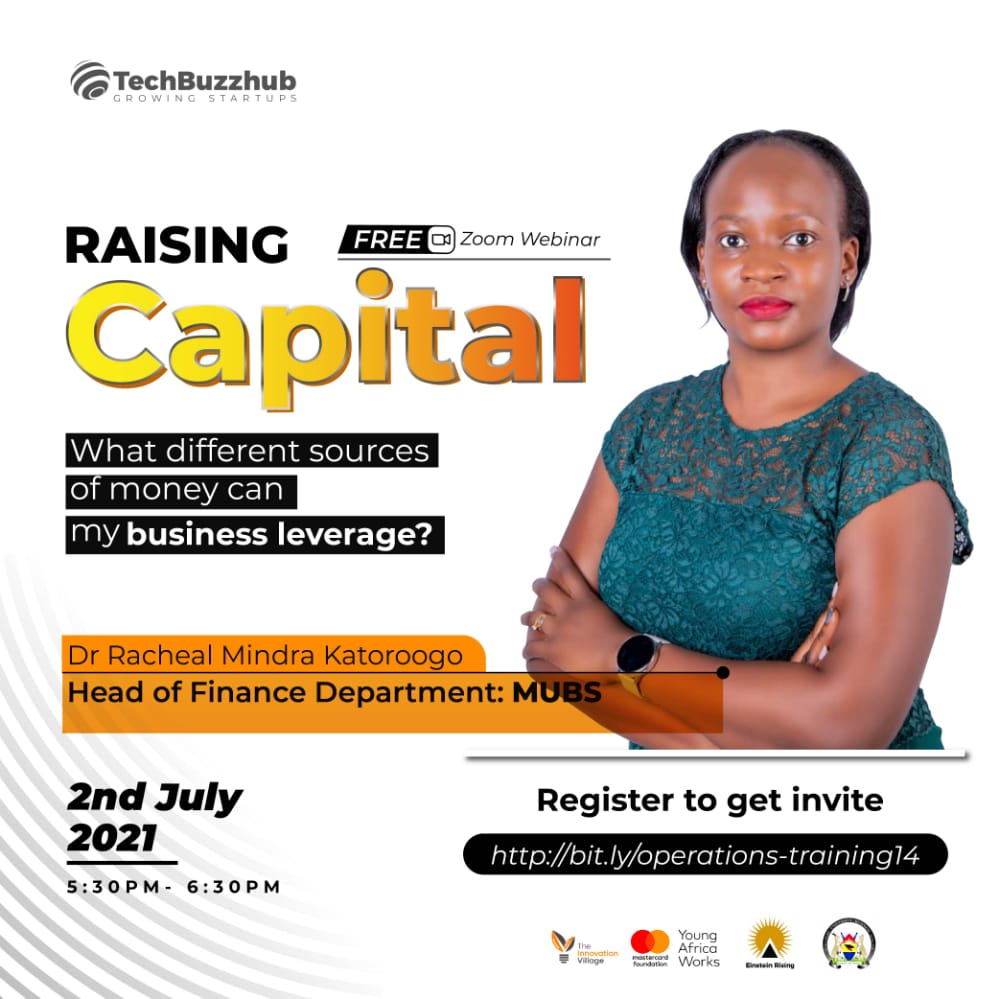
    RAISING CAPITAL – TRAINING

    what different sources of capital can my business leverage?

    We are coming from background that from a relative point of view businesses are completely a life painstaking and yet enjoyable journey, we say so because of the relative reasons that surround that saying. We also know that Uganda in particular I a very entrepreneurial country with the majority of the population engaged in startups, SME’S among others. However, that between 80-90% of the startups fail to make it to their first year anniversary. Thus there is a high rate of startup failure, this is because of very many reasons such as minimal business financing, lack of enough managerial capacity amidst other reasons.

    In this article we shall try to understand why entrepreneurs seek financing for their businesses, what kind of funding is therefore very relevant to your business what are you going to put onto consideration while partaking a business financial platform. The trade off, that is the cost and the benefit, the risks and the gain. Effort and impact.  These have to be out into very serious thought and consideration. As a disclaimer no financing is a fits all. That is caters for all your business needs. So you always need to seek more financing. Whether a business is in the inception, survival or growth, expansion and maturity, we all need financing, though it is very important for the startup stage.

     Why should I seek financing for my business?

    Basically to get started, you have an idea and you need to put it into actuality thus you go out to seek financing.

    • For growth. You need to progress from one stager to another thus one seeks financing.
    • For the purchase of a real estate among others. May be your business needs to move to better offices or you need a ware house among others
    • For the purposes of purchasing equipment for the running of the business.
    • The most important reason as to why people seek financing for their business is because they are seeking for working capital. Working capital is sometimes called operations capital. ‘Opex’ the operating expenses that a business need s to assumes the next level of your business.

    What do you put into consideration while taking a financial decision for your business?

    Entrepreneurs, people in the business community think about debt and equity how much of debt do I want how much of equity do I want. Or I can even strike a balance.  In the same line you put into consideration the self-financing. Something the lay man calls “entandikwa”, “olinawo mekka”?

    So at the end of the day you want to know which is the best option while financing your business?

    It’s good to answer this question in a very frim manner, are you able to answer this question basing on your financial strategy after a clear assessment of your business. I will start with the providers and the solutions shall come later. There are different providers of debt financing and it’s from these that you can sample out which one can do best for your company/ business enterprise.

    These include debt financing institutions such as,

    • the banks, development financial institutions e.g. east African development bank, Uganda development bank etc. non-bank entities.
    • Credit institutions,
    • The MFI’s – micro financial institutions usually regulated by the central bank of Uganda. 
    • Government programs like the operation wealth creation, the “emyoga”, microfinance support center the start facility, for startups with in the agricultural sector. It’s important for entrepreneurs to look out for these facilities to find out how best they can help us.
    • Crowd funders. (these shall be explained later)

     Equity providers of financing include.

    • The private equity firms, usually prefer to invest in stable firms,
    • Venture capitalists these prefer to work with (for startups)
    • Angel investors
    • Impact investors
    • Foundations
    • Crowd funders who offer equity facilities
    • Capital markets/ public listing, where firms have reached a larger market to give them the leverage for funding.

    Others;

    • Personal savings
    • Donors
    • Competitions
    • Retained earnings
    • Suppliers
    • credit

    How do I finance my business?

    1. Bootstrapping. It speaks more about or relation to self-financing. It means you start with living within your means.  What do you have, you need to start a business when you have some money. That starts with your own savings, your need to start with some traction this means the progress of your own company/ business. startups are advised to look so much at this option. Before you start looking into traction its highly unlikely that you are going to work with banks or other debt firms and other equity firms. This option works very well with startup firms, so you will need to look at your family friends and close relations. Its less costly in terms of interest.
    2. Crowdfunding. In this kind if funding, an entrepreneur will go online, and log into that platform, it will give you a profile, where you will have to put a detailed description of your business in your profile. And that means that the most important part of crowdfunding id your pitch, they don’t really care about how much you need as funds but rather your impact story, give a clear and beautiful impact story of what your business is trying to do. If investors start to pick up interest in your input, different investors give you different amounts of money and at the end of the day you have your amount you require as funding. There are four types of crowd funding.
    3. Rewards, where an investor gives you fifty dollars and does not require any interest but simply inclusion or recognition in one way or another as your product starts running in your society.
    4. Debt crowd funders. These give you their money with an interest which may be as low as 2% or more or less.
    5. Donations, where an investor is very interested in the effects of your business that is going to contribute to the economy of the world at large or the society he gives you that donation or money
    6. Equity, an investor ends up wanting a part of your business given the fund he is injecting in your business, like 20% OF YOUR BUSINESS, thus it’s your input to know which one works for your business which one does not. Do / can I get a financial return when I go along with this kind of business. Examples include; Alibaba, yahoo, google among others all started in a very small form before they became multi million.
    7. Angel investors. as they are called angel investors, they offer mentoring and advise alongside the capital they offer you. They are individuals who have a lot of money, and they have kin interest in investing in startups. They usually help startups in the very basic ways of business operations irrespective of the amount of money they give you. They work a lot with connections and they have an office in Ntinda.
    8. Venture capitalist. They usually go with the private equity firms, they invest in companies that have a big potential, they prefer stable companies to invest their money in. examples include; Mara in Uganda. Private equity firms include Damascus, Adebco, Pearl Capital among others.
    9. Business incubators and accelerators. These offer startup capital to startups, they could be very little funds but can help you as a startup, incubator are like parents they provide shelters, connections, work with other partners to provide seed capital to ventures and startups. Accelerators help businesses that are already working and running as opposed to incubators. Such incubators include, an incubator at MUBS.
    10. Grants and contest. If you go online or with in the networks that you have, or even banks, there are a lot of contests going on especially within the tech space. As an entrepreneur it’s your responsibility to go out there and access the viability of these contest in your business.
    11. Government programs, much as there are very many sentiments as regarding the current government its high time you overlooked these biases and go in for the government programs and funds.
    12. Banks loans. Many of the bank loans are very costly thus for startups it may not be a very good option for funding in your startup. Its commonly used by startups but it may not be the best option. Banks have rolled out very many facilities even to support SMES, but understand where you are and whether you can keep up. Usually they want other qualifications, like revenue, cash flow, and they look at the risks involved in your business, many times they want to look at collateral, and as a startup do you have collateral.
    13. Micro-finance institutions; many micro finance institutions provide loans and facilitate startups, e.g. investment clouds, Sacco’s, among others
    14. The capital markets. It’s about entities that have grown up, they are already in a maturity stage.

    What advantages do we have with debt financing over equity financing?

    DEBT FINANCINGEQUITY FINANCING
    ADVANTAGES
    Keep full ownershipLess risk than debt
    No obligation after paying debtNo paying back
    Interest is tac deductibleGain credibility through investor network
    Short and long term optionsInvestors don’t expect immediate return on investment (ROI)
    More cash on handFixed payments for better budgeting
    DISADVANTAGES
    Must pay backInvestor returns could be more than debt payment
    Could cause cash flow issuesInvestor gets some of your ownership
    Usually need collateralMust consult investor for decisions

    As a business owner it’s important for you to make an assessment of theses according to your business.

    You need to know yourself as a business operator or owner, well knowing that a talking to a lot of startups here,

    1. What stage of growth are you as a business?
    2. What are your funding needs? What kind of working capital do you need?  is it long term or short term?
    3. The risk appetite; how much risk are you able to take?
    4. The issue of return on investment expectation should also be importantly accessed.
    Business stageBusiness NeedFinancing Source
    InceptionWorking capitaOwners, bootstrapping, angels, suppliers, credit among others
    Survival.Working capitalOwners, bootstrapping, angels, suppliers, banks and grants.
    Growth.Working capital, extending plant.Banks, new partners, Retained Earnings private equity.
    Expansion.New operation unit, premise expansionRetained Earnings, new partners, secured IT debt, public capital (CM) joint venture, M&A  
    MaturityMaintenance, market position, R&DRE, LT secured debt, public listing

    Conclusive analysis.

    You an entrepreneur out there these are the few things you need to take serious note about when developing your financial strategy for your business.

    • You need to consider the right funding option because it varies from one business to another.
    • New and small businesses struggle to get equity financing so they must take on debt or focus on the other sources of financing their business., but also get your houses in order in many businesses the owner is the everything of his business, programs manger, the operations, the accountant so much so that when he dies the business dies with him.
    • Established businesses have a wider variety of funding or financing options.
    • For lenders and investors providing financing comes down to risk and reward or return.
    • Go into debt very selectively, the issue of debts from banks is very expensive especially for small businesses. It’s also necessary to discuss customer segmentation, in as far as business financing is concerned.
  • MANAGING YOUR PERSONAL FINANCES – TRAINING

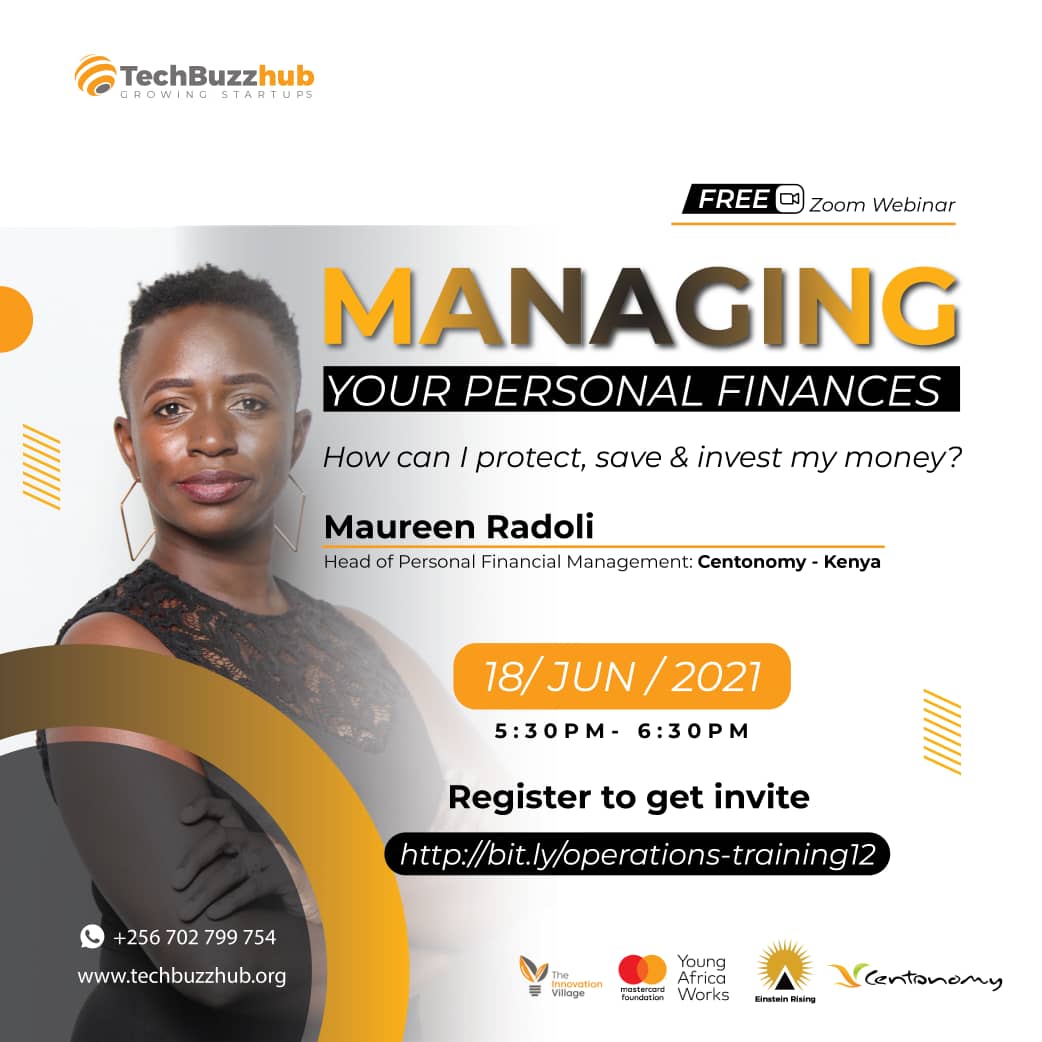
    MANAGING YOUR PERSONAL FINANCES – TRAINING

    HOW CAN I PROTECT, SAVE AND INVEST MY MONEY?

    Once again tech buzz hub brings you an interesting topic in the modern era. Managing personal finances. It is interesting because today many people are involved in the liquidated global economy where everything is monetized an it narrows down to how you handle your own cash. When you get it right then you become financially autonomous. This is the ultimate goal of the webinar. To train people how to be financially autonomous. This while training was delivered by Tech Buzz hub in partnership with Centonomys’, head pf financial manager, the one Maureen Radoli, who excellently elaborated what it means to manage your own finances using day to day examples.

    What are the first things to consider when you have received your income, like a monthly salary? In financial management, what should be your first consideration given the list of expenditure that awaits you?

    True you have received your income and as happy as the salary time or day is you fill like you have the whole world in your hands, looking at the money that you have. However, your state of mind should reside on thinking about yourself. Not on the selfish extravagantly way, but rather in a more appreciative way. Miss Maureen says, you always should start by paying yourself. It was you who struggled all the 30 days a month trying to get this money. Now that you have it go straight to paying yourself. The question is how?

     You do that by reinvesting this money that you have just received it. Yes, I know I have surprised you. Usually when some talks about paying yourself they think about buying this expensive shoe, shirt or dress that you saw had just been introduced in the market. No there you don’t reward yourself, you’re literally increasing your expenditure which is not a good thing. You have to invest that ka money. Save and invest more. You make sure you save as much money in order to invest more.

    Now when you talk about saving, it is necessary to know that you can hardly save without a goal. You must have goal for the money you are saving otherwise you end up spending the money you are saving every time a need a rises. So must have a clear GOAL, for that ka money.

    How do you save irrespective of your list of expenditure?

    It all goes back to your budget. Every financially autonomous person always has a budget that h/she strictly follows. The pay yourself first works well when you have a budget. An example of this budget is the A B C budget.

    Where the A column stands for the necessary needs, things you cannot deal without like rent, food, education, savings among others.

    Column B includes all the necessary but not important items or part of your expenditure like hairstyles change, going out, buying luxurious perfumes among others.

    Column C stands for all the items that are not necessary at all in your list of expenditure. Therefore, savings shall fall in the column A. it’s a necessary and important part of our budget. This kind of budget also plays out well for the emergency fund. For you will always have some money that is not your saving that only handles emergencies that come along the way.

    As per the goal for your savings, there are three major reasons as to why someone saves. Three major aims that is; to preserve your capital. In preserving your capital its actually, the money that you do not have immediate need for or use for the money.

    It’s important to save according to your goal.  Miss Maureen want to save money in order to start up a real estate firm/ agency. This is because she is already thinking about her retirement and it’s the way she can survive after her years of active service are done. So what is she to do, she says she has to fix her money in a bank. That means opening up a fixed account.

    The other reason as to why people save is, income generation, that is to create more income on top of what you have. For example, like dealing in fixed account assets like government bonds among others. This means that at all time you must have a goal for the money you are saving.

    How do we manage debt, irrespective of saving and financial management?

    Actually you cannot talk about financial management and fail to talk about debt. This is because at one time you will be faced by a debt, or a number of debt from different people. And they will pose a big challenge in your priority list in comparison to your set saving GOALS.

    You should always know that there is good and bad debt. The good debt is one you take for reinvesting; and the other is one you take for simply increasing your expenditure. For example; taking a loan in order to buy a range rover sport car is not a good debt. A car is not an asset, it’s more of a liability. But if you bought a piece of land put it into good productive use, then you would be using it as an asset.

    • The secret to debt management is simple:
    • Just pay the debt. All the debts that you owe should be paid at their respective due dates.
    • Write down and track down all your debt and when they shall be due or even over. Include all the interests that those different debts hold, that you ought to pay. It will help you look for an extra income to pay off the debt. This in a way is called the snow balls effect. How does it work?
    • Supposing you have debt A, B, C and they have interest as follows, 10%, 15% and 19% respectively. It will make me able to make an extra income that shall allow me to pay the debt off comfortably and which to prioritize.

    Is it good to hold onto money?  How do I avoid linkages in my expenditure saving ratio?

    With money you have to define for it a route. Always put money where you know it will grow. Have a budget for the money you have at hand as soon as possible.

    It’s also important to have two accounts affixed account and a current account. And it all goes down to discipline. Because if you are not disciplined enough financially then even when you have a fixed account it will be useless. So have your expenditure tracked by writing it down in every single detail, this will help you know your weakness and your weakest point, define a route for your money immediately you have it.

    An example is guy who came to us at centonomy, and told us he could not save his money, even when he wanted to. After tracking his expenditure, he realized he spent 2 million shillings on alcohol a month. This made him make up his mind to save that money instead of spend it on drinks.

    After talking in depth about saving our money, and developing a good financial discipline, the question then lies to how do we multiply that money. Where can it be reinvested to have it multiply?

    Miss Maureen advises that your money can be put in investments like:

    Property. Property is a good venture to start with. Don’t Buy property and let it just be there, get it productive, set up a retail shop, rent it out for business among others. There you are multiplying your income.

    Stock markets. Involve yourself in stock markets. It’s an organization that makes you part of the business by enabling you invest your money in companies. The stock markets are part of capital growth; this is because your income simply keeps growing. The risks involved are high but they pay off well.

    Investing in treasurer bills/bonds. These are government bonds that the government sell off to the public and once the stakes are good it buys them back. They are safe as compared to stock markets because there is security that you shall get your money back at one point. Any one planning for retirement should try this venture.

    Getting into the money markets. It is a place where you put your money and it simply grows and it develops interests by compound effect.

    Business. Finally, you can open up or start a business. Your business is a good way to grow your money. However, in this case you need to set for yourself a salary. Since you are also an employee of the business just as all the other employees are otherwise you may end up mixing business and personal expenditure.

    Note: be careful insurances are not investments. They are simply protective vehicles for your business or asset, which may pay off at one time.

    What tools can I use to map out my whole journey of financial management?

    To be realistic there are no specific apps that one can rely on in order to have or be a good financial manager of your own resources and money, but you need to start from what you want, track your spending and decide to save where necessary. The whole thing is driven by what you intend to achieve at the end of the day. Your goals.

    In saving there are things that are not part of your budget but are important and arise at the point in time when you have already drawn your budget. How do you deal with them irrespective of saving?

    Your emergency fund must always be part of your savings. Though it is wise to separate the two in different accounts but all the same on your budget it must be included in your savings. Make sure your emergency fund is a minimum of three months of your income.

    In conclusion; financial literacy is directly proportional to your future. By saving and reinvesting you are securing your own future. So its wise to plan your future before it becomes your   present.

  • PRODUCT DEVELOPMENT 2 – TRAINING

    PRODUCT DEVELOPMENT 2 – TRAINING

    HOW CAN I DELIVER/ IMPROVE MY TECH PRODUCT?

    From the webinar series we present to you the other part of product development. The previous article was about product development 1 which was generally dealing with the consumables and all products on general. This time round we specifically want to understand what turn it would take for the product that was basically tech related. Today the world has changed so drastically and some things are soon fading off, easier technological products are being introduced in the market. New innovators are cooking their minds round the globe to make life easier. Its referred to as the forth phase/ generational industrial revolution. As a startup, in a third world country such as Uganda, you are probably seeking to join that eco system become a product owner, or developer and you don’t know where to start from. May be you have started and you are stuck at some point, your product has failed. Timothy Laku, the Chief Technology Officer at Global Technology Advisor and Bringo Fresh is here to inspire and give you a push.

    Why does technology matter anyway?

    According to him (Timothy), the world has grown and changed a lot. It no longer those early times when people were getting introduced to machines and iron instead of the ordinary manual labor. Today the global village lives in the 4th generational industrial revolution where everything revolves around software and computers for data collection, the smart products, like watches, phones, television sets, pads among others. It’s the reality you need to stay within, because like it or not it affects your daily existence.

    How do I become a better product owner?

    It all starts from the kind of problem you are seeking to solve, where exactly is your focus? For example, while looking at the challenges that a student in Uganda is undergoing to study and access academic resources during the pandemic ad lockdown and seeking to solve it through technology where do you set your focus. Many people look at the small Kampala, and Uganda. which is wrong look at it as a global problem that even the same student in Asia/ japan is facing and solve or look for a solution from that angle. This will give you a better approach.

    Obviously if you don’t see it that way then you might be solving a wrong problem in this 4th generational industrial revolution. The litmus test for me(timothy) is the way you approach the problem you are trying to solve.

    How do you build an amazing product today?

    There are several steps involved, I would draw your attention to only 5 steps.

    Step 1; you need to know where you are as a product owner.  A product owner is not necessarily the person who designs the product. It’s the person who owns the idea. So a product owner may arise from any filed of life, could be business, graphics and design, web/software designer among others. However, where does this product designer belong. In a tricycle kind of elaboration. He falls in the intersection of the design, business or technology dimensions of life or any other, the key word is the intersection. Not only one of the others or else he shall face allot of challenges with his product in the market.

    Step 2; there are 8 rules to building a great tech product. These include the following.

    1. Knowledge of your customer. You must know who your customer is and know him or her pretty well. This will help you build what will be relevant to his challenges at the moment. “don’t sell ice to an Eskimo”
    2. You have to understand your customer. Your target customer very well. Like you have to sell a size 8 shoe to a size 8 foot. not less not more. Same applies to tech products. Understand your customer. Lack of clarity of your customer details results into product failure in the market.
    3. You must match the features of your tech product with what the customers want, and need at that particular point in time. “a patient needs medication not a trip to Dubai.”
    4. How do you get your clients and customers access your platforms and products? You must clearly show how the customer and consumer of your product can access your platform. If they are used to calling you then you need not involve the product on social media. If they are farmers then social media to them is irrelevant, but community Sacco’s would do better.in other wards perfect your user on boarding journey. You rather spend all the little money and time you have perfecting this, otherwise you might have wasted your time on the tech product.
    5. First presentation always matters. When It comes to consumer interface do not cut corners give it your best. It is what shall literally sale the product to the consumer.
    6. Admin screens are like your pajamas, very few people will look at it. So do not devote a lot of effort and resources to it yet. Rather spend it on your client screen.
    7. Solid tech architecture is your foundation, so invest in your product foundation as much as possible. The thing is you fail on the architecture part of your product you as well have not built any product, for it will fail.
    8. Finally, complex workflows are like electrical wiring.

    Step 3; is the question of whether to outsource your team or to insource your team? Usually comes at a time when the product is being developed. The product owner either outsources the team or insources the team to work on the product. The product owner is faced with this question and decision to make. It has pros and cons for sure. But it also depends so much on the kind of product concept you are developing and the money involved in developing this product. Outsourcing for example could be expensive but usually takes a shorter period of time to have the product ready, insourcing may be cheaper but takes a longer period of time for maturity and more expensive when it comes to resources.

    Step 4; there are seven easy steps to formulate an effective GTM strategy. (get to market)

    • What is your target market? You must know your target market. It must be clearly mapped out. Are they youth, farmers, bankers, students etc.
    • What / who are your target customers? You must understand clearly who your customer is for the product you have developed otherwise it shall be a flop in the market.
    • What are you offering? Knowledge of what you are bringing into the market is key, its advantages over the eco system you are entering, disadvantages among others.
    • What are your channels? Simply refers to how you shall access your customers and how they shall access the product easily. Is it through social media, show room, internet, reaching out to clients physically? Not ever channel is suitable to every set of consumers and the product itself.
    • How will you build your budget? Understanding how much you need to raise fot the whole process is also very important, getting to know where to inject more resources.
    • What is your marketing strategy? What marketing strategy are you going to use in order ot get the traction you need to your product.

    Step 5; this stage is all about your mindset as a product owner. How best do you try to build a product? Always ensure that the product you introduce in the market is able to solve the consumer’s immediate problem, slowly by slowly, one at a time, every stage of your product development should be able to address the consumer’s problem to a given degree not until you reach your desired dream and high-tech product.

    You only achieve this by listening to your customers. Thank you for this effort and we hope that you are enriched more form this article. Many of the words herein were not quoted in verbatim those who wish to have access to the webinar please feel free to follow the link. Follow us on the nest webinar about managing your personal finances till next time.

  • PRODUCT TESTING Pt. 2 – TRAINING

    PRODUCT TESTING Pt. 2 – TRAINING

    These trainings are brought to you by TechBuzz Hub in partnership with Mastercard Foundation, Young Africa Works and Innovation Village

    Because it is a very crucial topic we bring to you another version of product testing. You must surely be wondering why should we go at it twice? What better thing is there to look at?  Well knowing that product testing varies with what kind of product one is having to test. We want to bring to your attention a product from another dimension of thought. On board we had Miss Philippa Makobore, a successful entrepreneur/engineer/inventor and innovator, working with Uganda’s biggest entrepreneurial support company, that is Uganda Industrial Research Institute(UIRI).

    What is a product?

    It’s a tool that has been created to perform a specific problem. In this case we look at something tangible, could be hardware driven by software or a mechanical product

    What then is product testing.

    Is when you try to evaluate your tool assesses its functionality, how it performs, based on a set of specifications and requirements. For example, a medical device needs to have safety as paramount in product testing. There are more or less three stages of product testing in the medical sense.

    What do you need to have in place to have your product tested?

    You must have a test protocol. These requirements include non-functional requirements like size, aesthetics and any other requirement. There are also the functional requirements like you need to know how the product is working, you will need to assess the era margin. All these should be entailed in your product testing goals. There are generally two ways of testing, these are;

    • White box testing: this is usually done by the developers and the creators or innovators of the product. In a general sense the technical group.
    • Black box testing: this involves someone or people who did not take part in the development of the product. So generally this is a user perspective kind of testing.

    What I needed in place to have my product tested includes, having ethical approvals from the respective regulatory authorities. For example, internet testing needed its requirements thus internal ethical approval, to verify whether the product is not harmful, external

    Do you need testing in all the products?

    Testing is a must for all the products. It is not only for medical products or devices that need testing, even other kinds of products in the market.

    How much information should one avail to his sample space?

    From a medical perspective you will want to explore the area of safety which is very key in product testing. Thus for safety reasons you would also want to limit exposure. And so for my case we had to get clearance of all forms to have the product tested. This also meant that those going to get involved in the testing should know something about your product. Such as operating the device, troubleshooting in case of a system failure. In the other way it helped achieve better results.

    How many people should one involve in product testing stage?

    Assuming the product was developed already and this product has to be tested from a medical perspective, you may not be in a position to test the product by one self. In my case I had to bring on board other technocrats, like engineers, doctors, clinical assistants and nurses, and finally industrial designers. This was because each of them had a specific role to do at each given time.

    What is the relevance of having product testing?

    Product testing as earlier noted is very important in every single aspect of your business. This is because you always want to know whether your product is being accepted by the community by the society, whether or not the device is cost friendly, safe to the users, and most of all manageable. In the words of Philippa, she says, it’s very “critical” because one needs to ensure sustainability of the product.

    Would you say product testing is expensive.?

    The question that would come to mind is at what stage of product testing is it expensive, because when you look at testing of a product at the initial stages then it would be cheap however when it comes to research and development commonly known as R & D , the regulatory testing part of it especially in the medical field and industrial manufacturers and innovators then it is really expensive. It requires a huge capital base which is basically acquired from donations and grants. So yes the later and final stage of product testing is and can be quite expensive.

    Do you think product testing can be taken on as a job to curb the unemployment gap in Uganda?

    Honestly speaking, says Miss Philippa, it is very possible to grow that segment of the economy.  In the western world you find quite a number of auditors, regulatory compliance assistants, certified internal auditors among others. Even in Kenya there are quite many auditors compared to Uganda. So this can be a good opportunity for growth.

    In product testing and trying to attain feedback there is always a problem of patent theft. How do you advise a young entrepreneur to safeguard against that?

    The fear of intellectual property theft is a very modern and important aspect in your product sustainability in the market. Therefore, to avoid it, do not share the novo aspects of your product with any one apart from yourself irrespective of where you have taken the product for pitching or showcase.

    Indeed, acquiring an IP for your product is the only assured safe way, and this you can involve the Uganda National bureau of standards to help you get you good lawyers that can help in the matter. If you don’t have the money, then remaining safe is way better.

     The underlying statement is that the process of product testing takes twists and turns varying from the kind of product you are testing. The methodology may not be straight as we have seen in the two encounters, however the end result is always the same. A consumable product like juice may have a different criterion, as compared to a hardware device, or even software product. The benchmark still remains that the entrepreneur must look out for the acceptability and viability of the product.

    Thanks once again for engaging with us on this topic please wait for more good practical information. Remember to attend the webinars that are hosted by Techbuzz hub to get a clear understanding of these topics that mentor you in business activities today. Till next time.

    Martin Moses Andama
    TechBuzz hub.

  • PRODUCT TESTING Pt.1 – TRAINING

    PRODUCT TESTING Pt.1 – TRAINING

    How do I know that my product Is ready for the market?

    You are a young entrepreneur and you have moved all along the way from ideas and forward through formulating a business plan, and proposal all built around a business concept.  The maturity of your concept is realized in your product. But the question remains how do you test your product? Before you even test your product, what is product testing? Is it even relevant after doing market research? All these and many other practical questions shall be illuminated with a little reference to the webinar session where we hosted the CEO of Ndalausi Juice. Mr. Ndalausi Lutale, a youthful entrepreneur who has made it to greater heights at a very young age.

    What is product testing?

    Product testing is probably the nature of feasibility of one’s product with the target audience. It is the process where an entrepreneur tries to find out whether or not his product being introduced in the market is solving any problems, is acceptable, and wanted by the target market. In a way product testing is part of market research.

    Usually as a pre- requisite you need to put more emphasis on the feasibility of your product.

    How did you do product testing?

    In order to have your product tested in the market or with your target audience you need to consider a few elements. These include price, premises/ place, and promotion, as Mr. Ndalausi puts it. You need to know what price you value your product at, whether or not this price shall be accepted by the consumers you are introducing it to. You also need to know the place where you are introducing your product to, different products are demanded differently depending on the region, or place.  Lastly you need to consider the mode of promoting this product. The way you package your product affects the general outcome of your product testing and what kind of feedback you can expect. So basically he put all these aspects to consideration and then hit the streets.

    However, the question is, are these really enough for product testing to kick off?

    Theoretically from a bigger perspective yes, however from a reality point of view, there are still other things you need to put in place and those include;

    • Resources; – you need to know which kind of resources to involve in doing product testing. These include, money, human resource; which can include people in your circle like family friends, neighbors among others.
    • Channels: – the channels to use while actually testing your product also is very important. You need to know how best those channels or platforms can help you attain your marketing goal. For example, if I used the internet and social media to have my product hit the market would I have results. This is all dependent on which type of product.
    • Customer segment: – What is your customer target? What kind of customers are you looking forward to dealing with? Which age bracket are they? Usually they ask where is your fan base. Your customers cannot be the elderly and you are giving your product to the youth and kids. So you must look out for your customer segment in the population.
    • Key partners: –  Usually these help you move the product in various directions. Who are your partners and what are they in the sight of the target population, or even the public?
    • Reality: – It’s always about reality and surely narrows down to this. What are you doing on a daily basis to test your product to see whether the problem that exists in the society is being solved.

    Mr. Ndalausi, how did you do it the very first time?

    First I had to scan around the environment where I was. I looked out for the problem that the population was facing. I used to sell water and soda. And slowly by slowly people kept asking for juice and I kept moving with what they demanded at the moment not until I came up with this kind of juice. While testing my product people always gave me feedback on how I needed to change this or that. One time I was even stopped from accessing a bank. The bank manager claimed hawkers were not allowed in the bank premises. so it was not easy but I had to give it my best, by not giving up and being open to all comments from everyone testing my juice.

    How should one handle and assess feedback especially during product testing? In other words, how do you interpret data?

    Feedback is very crucial to product testing and as an entrepreneur you must be able to expect feedback from what you have given people to taste. Feedback is in two ways the positive and negative feedback. There are those people you offer your product for tasting and they simply encourage you to continue producing the product with suggestive ways of improvement. This is what is called positive impact or feedback. On the other side, there are also those who actually discourage, abuse and tell you how there is no room for your product in the market. This is negative feedback.

    Question always is how do you handle the two? From a personal perspective Ndalausi says it’s not easy, but acceptance of one’s imperfection should be the first step towards growth and improvement. It’s also good to be so flexible in your business operations. This helps you and your product remain relevant to the customer or consumer base.

    Is it relevant to take on product testing during your business growth.?

    Yes, Mr. Ndalausi of Ndalausi juice says it is very important to carry and keep track of how your product is doing among consumers depending on your consumer base. This is because it’s a business and at the end of the day one needs to know how best he can maximize profits, and this is only attainable through knowing the amount of sales one has done.

    Can someone do product testing as a job? Yes, it can be a perfect job for someone depending on what that person is good at. To do this well that person should also be a talkative person, amidst all other attributes. You must be able to explain at length the kind of product that you are introducing to this person. You must know how best you can convince someone that your product is good.

    Which people do you need during product testing? Can you do it by yourself?

    You need people to help you in different ways. You cannot always do it alone. You need help from colleagues and friends etc. people have different preferences and so you need a sample space of the various kind of preferences that people have. So you cannot do it alone, you may need a team. That does not mean that you can’t do it alone. Yes, you can, though it may be a little tiresome.

    What are the challenges that you think are involved in product testing?

    • Expect the negative feedback as was earlier talked about. But how best to handle it is also key to your success as an entrepreneur.
    • Resources … resource in terms of money to run up and down the streets to get people to tell you what they think about your product. Usually resources are in various forms like we earlier noted. 
    • Poor data collection mechanisms during feedback collection. This may actually make you get wrong results at the end of the day.

    Insights FROM MR NDALAUSI

    Product testing is for every entrepreneur. It is very important to start irrespective of how much you have at hand in terms of resources. I can tell you, some of the things I regret is to start in time. I did not start immediately. I identified the problem that was in my community. So don’t fear to start, and have the courage to go through all situations let us, the entrepreneurs, not sit in our comfort zones, and yet the world is ready to support us in our inventions and innovations.

    Product testing varies with the kind of product you are actually testing. It is important to know and identify which kind of product can be tasted in which effective way. Check out the next blog for another version of practical product testing.

    BY

    MARTIN MOSES ANDAMA

    TechBuzz Hub

  • PRODUCT AND MARKET RESEARCH – TRAINING

    PRODUCT AND MARKET RESEARCH – TRAINING

    These trainings are brought to you by TechBuzz Hub in partnership with Mastercard Foundation, Young Africa Works and Innovation Village

    Product and Market Research.

    From our series of webinars, we bring you the product and market research. Which is moving forward from the previous topic we looked at and that is the business plan, business proposal, concept, discipline of idea generation among others. Product and market research comes a time when one has grown and incubated his ideas to maturity and now it’s time to see the relationship of the product or service being offered to the population or call them consumers, the target market as per the business plan/ strategy. This stage in one’s business is very important because its where the question of am I solving the problem that I wanted to solve on the beginning, is answered or not depending on the responses one gets. In this particular webinar we are joined by an expert in market research Dr. Etyang and Isaac Ssekatawa who over the years have been involved in this activity of market / product research. they shall help guide us through the questions that we have in order to see how best we can appreciate this concept in business.

    PRODUCT AND MARKET RESEARCH. HOW CAN WE SUCCESSFULLY DETERMINE THE VIABLILITY OF OUR PRODUCT?

    “Salus populi suprema lex” literally meaning the welfare of the people is the supreme law. The statement was made by a roman member of the senate who after the romans had won the city where deliberating on how best to govern them.  I welcome you all to this discussion and a recap of our weekly webinars that are held every Friday. This time round we have a product at hand we are not sure whether it shall be accepted in the population or not, we want to know what situation is in the market before we introduce our product. what do the people want, does my product solve the problems at hand? Among other questions. Thus we shall make a market research to answer all these and other questions.

    This time round, as it has been our culture, we have on board a Principal Consultant at FEM MARKETING AND RESEACRH AGENCY, Mr. Fredrick Etyang and Mr. SSEKATAWA ISAAC, a Chief Marketing Officer at TRAAC.

    What is market research?

    Market research is the effort or ability of a business player to understand his target market and the target clients of his product. You literally struggle to understand who is going to consume my product, where that person is located, and how do I ensure that the product is delivered to the target client safely. Market research is all about understanding the dynamics of the market I relation to your product.

    What is the relevance of product and market research?

    Market research is actually a fundamental element of our business. So much so that it may not perform to your expectations without market research. It may not reach its optimal production in case you missed out product and market research, this is because of some of the importance’s that am going to share with you.

    • It enables you understand the different opportunities around your business. You may not have known without moving out to make a survey. For example, you can get to know the new markets within the already existing markets.
    • It enables you to reduce or rather it reduces the risks that your business is bound to face. Things to do with competition and co-existence in the same eco system.
    • It enables one to improve on the promotion materials, that’s incase what was in use what not going to impact allot to the target clients or consumers.
    • It enables the business player to out compete his competitors, question is How? by identifying unsatisfied customers or clients and therefore attract him.
    • It’s a very important tool in decision making. In getting to understand your clients, your decisions are informed and based on available data.

    How do you start a market research? As a startup how best can I start or do a market research?

     For any startup to begin a market research we shall still refer to the main reason as to why you thought you would enter the same business, a problem. There must be an existing problem that you are look forward to solve in the existing market. There must be a practical existing problem such as a decline in the market share like running a business at a normal market share of 20% but keeps reducing to even below 10%. Therefore, there are things to consider as you establish your business and you want to do a market research.

    • First develop a research plan. The research plan should generally answer the question like, how do I intend to carry out/ conduct my market research. This question should get you thinking on the methods to use while carrying out a market research.
    • Make a decision about the methods that you would use in making research. These include; interviewing, questionnaire, sampling observation, among others. It’s very important to choose the best method as it can easily affect your raw data from market research thus leading to wrong decisions that would cost your business.
    • Then identify the target area. Location where you intend to make market research should be clear in your research plan. Otherwise its wrong data for your business. Knowing the area location is not enough but also knowing the products in circulation in that very area in relation to your intended product.

    What are the types of methods of market research?

    Like we pointed out earlier there are very many methods of market research that entirely depend on the type of product and the area in question.

    • Interviewing is one method where the researcher comes up with an interview guide for the respondents to answer. The interviewee is then guided through what the researcher wants to find out.
    • Questionnaire, the method where the researcher develops a number of questions drafted on a paper and the respondent simply has to answer the different questions usually ticking boxes.
    • Observation; this is where the researcher uses his eyes or senses (6major) to collect raw data from the field. The business researcher goes physically to collect data by literally just seeing and looking out for what he wants.
    • Sampling. The method where you select a given portion of the population in an area to have your questions answered. Sampling has various other kinds like, random sampling, convenient sampling and the cluster sampling.

    How do I select the target population for my research?

    Mr. Fredrick Etyang emphasizes that you must know your target population. However, to make research more practical then you may consider using sampling methods to zone out what kinds of people, in which age group, and where is, also very key in efficient research. Thus applying sampling could help you. For example, if your research is based in Kampala, you could use the divisions as simpler clusters from which you can make clear data research.

    Is the venture of doing research and market research in particular very costly especially for startups?

    Research in itself is a very costly venture, it is very expensive, however it is good to keep optimistic that the expenses of research depend on the business interests one has. Of course the cost of research for a startup that is operating locally around Ntinda may not be equally proportional to the cost of a business that has nationwide coverage.

    Therefore, for startups there is a cost effective method of carrying out business research, that may not so much affect the startup but still provide good quality results.

    It is always important to hire experts to carry out research, because they know which best method can be used to achieve what results, while minimizing costs. If you want to collect the right data then you must need an expert to help you collect data, using the right methods and thus have you make informed decisions for the future of your business.

    Entrepreneurs should know that research involves expertise both human and virtual experts.

    Lack of the best experts can mean that there is wrong data analysis, thus leading to wrong and uninformed decisions thus business collapse before even their birthday year’s celebration.

    How do you analyze and interpret market findings and data?

    You do this by comparing and review existing literature of the people and how they react to new products. All information possible.

    After collecting data, you’d cross referencing, where you look your findings in respect with the existing one

    Thanks so much for the time you have taken to read this blog out. Endeavor to follow other interesting topics that are coming right after this very one. stay blessed and catch up next time.

  • BUSINESS PLAN – TRAINING

    BUSINESS PLAN – TRAINING

    These trainings are brought to you by TechBuzz Hub in partnership with Mastercard Foundation, Young Africa Works and Innovation Village

    Have you ever ridden a bicycle without its chains, have you ever thought of driving a car without its engine affixed to it? Having a business without a business plan is just like the assumption of driving a car without an engine. A business plan is the core of a business. It is a set of work plan that a business literary bases on to do to thrive. Many entrepreneurs have practically thrived without a business plan necessarily put on paper, and many young entrepreneurs seem to question why do we need all these paper work for. I want to assure you that at the end of this article, you will see the necessity of a business plan in your business.

    This article comes to you from the webinar that took place on a Friday. The main panelist was Newton Butereba of the House of Wealth and thereafter some questions and answers were taken by Racheal Lwantale from imali. It was a very fruitful event that inspires this very article. From which many of the questions arose from young entrepreneurs like you were answered. Let’s go right to the start.

    What is a business plan?

    It’s a written document which helps the business define its objectives goals and how it plans to achieve its goals. Just as simple as that, however to understand these we have word per word.

    What is a business?

    A business is a repeated process that does these following things;

    • It creates and delivers something of value.
    • That other people want or need.
    • At a price they must be willing to pay.
    • The value of which must be in a way that satisfies the customer’s needs and expectations.
    • This is so that it results into a profit that builds the business.

    Value creation. A business must be able to create value. In this sense it means a product that must be of value. Otherwise it shall not be relevant to the population and the other prerequisites don’t stand.

    What is a plan?

    A plan, sometimes referred to as a strategy, is the detailed information on how some particular goal shall be achieved. you look at a beautiful land cruiser V8, and you tell yourself, I want that car. That becomes your goal. And then how you attain that goal is further explained in your plan. Your strategy. It usually involves very many things. That takes us to the main reason as to why we are here, a business plan.

    A business plan simply helps one to understand, have a flow of the business. From the ideas, concepts, that generally result into a product that eventually goes to the market and thereafter have feedback and progress calculated. It generally helps one manage your business on a day to day basis, weekly, monthly, and basically yearly. It describes in detail what the business shall define objectives and how it plans to achieve its’ goal through the objectives.

    Why do we talk about goals? Goals are the end result of something that was in action. For example, you enrolled as a student at a university, went o compass some of your objectives includes having a lot of contacts or making friends.  And so once you have those friends, you have achieved your goal. Some others will say my goal is having a first class at the end of the three years’ period. And once you realize that your CGPA is say 4.5 then you know you have achieved your goal.

    The things that take you to your very end are the objectives, they are the things that take you to your goals. Things that help you reach your ultimate goal.

    Jim rohn says; “never begin a day until it is finished on paper”. He is simply telling everyone to plan for his day before it starts. There is a chance to run your day orderly if we plan earlier. The same applies when it comes to a business.  It must be planed and that is why we have a plan.

    What are the contents of a business plan?

    After understanding that it is very important to have a business plan, we therefore ask ourselves what is involved in a business plan. Surely just like any other plan made elsewhere there must be some contents of a business plan these include;

    • Value creation,
    • Marketing,
    • Sales,
    • Delivery and
    • Profit

    Every single business fails or has a very big chance of failing if it does not have a business plan. If it does not have the characteristics of a business, the tenets of a business. If the plan does not describe how the business creates value, how the value is marketed, sold, how its delivered, and basically how the business makes returns. Anything that does not do the following seizes to be a business. It becomes something else, it could be a scam.

    • Value Creation. This involves creation of a chapatti, or a Rolex, or baking bread. This product that you have created must have value. In the first page of your business plan one must show how he creates value and how his business creates a product. It does not necessarily mean that the product must be created by you, it can be done by some other person for you meaning it involves paying for those services.
    • Marketing: The following topic is usually how the product shall be marketed. How you are intending to have your product attract attention. A full description of how you intend to attract attention from the various segments of the market. Is it by using posters, need people to taste your product, will you look for celebrities to advertise your product on your behalf.it is good to have a marketing plan that avails feedback. This is because an entrepreneur always yearns to grow, so feedback help achieve growth of to a business.
    • Sales: After creating a product of value, you are sure that the product is needed by the public, and thus they want it at a given price, you have marketed the product and now the next thing your business plan should explain is how you do the sales. Is it through sales agents, does it involve delivery.
    • Delivery: While explaining the contents of a business plan, newton found it very necessary that it included a delivery plan. Usually your product that appeals to the audience you have, will want it delivered to them. This is part of customer service. The importance of this is that it shows how you value your product, how you understand the customers or people literally buying from you and you expect to quench their urge. You want them to be satisfied with your service.
    • Profit motive. Quite related to sales and marketing. This part of your business actually defines your business. No entrepreneur wants to engage in an activity that is not redirected to gains or profits. These profits are realized through sales and good marketing.

    What can you do when your business faces business interruptions that were not foreseen for example the Covid 19 pandemic that sunk down most of the businesses? By Brian.

    Racheal Lwantale replied to this by saying that you as an entrepreneur must be able to adjust and rebrand your business in order to survive such drastic situations and catastrophes in a business world. The best example is “Jumia” they moved from one line of distribution to another just to survive.

    Is there any way someone can push a business from home and still have clients come to your home? By Ritah.

    Yes, you just don’t have to tell them that you are working from home. You tell them that is where your business is located. Besides tech buzz hub together with Imali provide start up services like co working space, virtual space network, startup incubation, work place addresses where you as a young entrepreneur can benefit. You do not have to meet clients at home. You can as well hire a space to meet your clients if you think it will inconvenience them at home.

    The bottom line is that “knowledge is power” says some unknown author. When you get to plan your business, you get to learn allot of information on how best you want it to run. That information is your power against your competitors in the market.

    Look out for our next webinar about the market research. We bring to you these webinars to transform your perspective from its already impossible to its possible.

    By: Andama Moses Martin
    Asst. Operations
    TechBuzz hub

  • THE BUSINESS PROPOSAL – TRAINING

    THE BUSINESS PROPOSAL – TRAINING

    These trainings are brought to you by TechBuzz Hub in partnership with Mastercard Foundation, Young Africa Works and Innovation Village

    “The way to get started is to quit talking and begin doing.” Walt Disney, founder of Disney.

    The only way a startup is going to wade through the waves of stiff competition from big rivalries irrespective of the new inventions he is bringing into the market, is by focusing and having a plan. This plan is backed up by a good proposal. This time round we would like to bring your attention to a business proposal and what it can do for your startup. 

    Ideas in this piece are borrowed from the webinar held last week on Friday, where Vanesa Shimwe, an entrepreneur, working in a number of organizations including the Young Africa Works, illuminated on the topic of business proposal. In a brief virtual discussion this is what she had to say. Disclaimer; some of these and are not in her exact words.

    A business proposal is a document showing a little description of a series of activities that an entrepreneur is going to do in a given period of time. It related to a business plan, but delving further into the subject you shall understand that they are different.

    When drafting a business proposal very many things have to be put in place or into consideration.  For example, planning, writing, presentation, and sometimes even implementation.

    Planning. As a young entrepreneur you are looking to attract a given group of clients, who are already established in their area of expertise. Here you are, looking forward to having them join your business or enterprise. What you have to do is to research the problems that the client is looking forward to solving, what solutions do you have for these problems, what does your audience want. 

    Usually when drafting a proposal your intentions must always be satisfying the expectations of your clients, your audience, the target population amidst other stakeholders in your line of business. But key to all is understanding what your client wants. Because you are trying to convince him/her that you are good at what you do, and that you are the best option they have in the market over your competition. So you need to know them well enough.

    Doing extensive research makes you knowledgeable about your ecosystem, and what you can do to have a winning proposal.

    Writing. Drafting a proposal comes immediately after making an extensive research. At this stage you know exactly what you want, what problem your client is looking forward to solving, and what solutions you have at hand. 

    At this stage you need to be sure that you are well understood, therefore use appropriate language, be clear, and simple. Avoid using a lot of words, informal words, slangs must always be avoided. Preferably use simple understandable English to describe and explain one’s ideas.

    • Have an introduction, containing who you are, what you do, the problem at hand that you clearly have a solution to, and the possible solution.  
    • State the people to whom the proposed solution is going to affect or effect. The target population for if it is a product it may end up in the market.
    • Cost the proposal. In your body one of the things you are to include in your proposal are the items you need to put in place while implementing your proposal. This will usually determine how much support you expect from a donor or a client. It should be based on the market conditions.
    • Review your proposal. Usually it’s advisable to have someone review it for you. It is also good to have someone who is in the same line of business of your proposal.

    Its also advisable to have at least 6 pages of your proposal. The more-straight to the point it is the easier you will be able to present it to the clients, or target audience. 

    Now, as you are writing, the question arises, what specific things to include in a proposal.?

    Ms. Vanesa replies to this by saying that simply, research. After making thorough research on the various things that you are going to base your proposal on, that usually comprises getting to know your audience. Literally moving in their lives. It depends on who your audience is, if the target population is the Karamojong, then you have to know what they love and hate, how they live their day to day lives, so as to be in position to provide the most efficient solution to the problem you have cited.

    After writing your proposal you might be busy trying to figure out how do I present my proposal. 

    This is the most important part of the proposal. This is the part that actually proves that you didn’t waste your resources in writing a proposal, why? Because you are selling it out to someone who does not really care. So the best you do here makes the whole work a success. Like it is usually said, first impressions are very important, especially when you want to build trust. You surely will want to do it in the most effective way possible.

    Ms. Vanessa gives a few tips on how to effectively present your proposal.

    • You could use pitching/ pitch deck. (a powerpoint presentation slide that helps describe your business, clearly presenting the problem and the solution. This refers to a number of slides you could use to present to the target audience.  People like donors usually have little time, a small attention span, therefore try as much as possible to present your major points and catch points especially benefiting the audience before any other. (key points first)
    • If you are to use email, make the email as simple and straight to the point as possible.
    • If your option is face to face presentation, it’s good to articulate how the proposed solution benefits the target audience more than yourself. In other words, people like selflessness. If you portray that to a potential donor or client, then in one way or another you have higher chances of being successful. Be careful not to be rushed to saying everything all at once remember the attention span is small for most people.

    Being an era of technology and innovations a young entrepreneur would also like to know whether there are tools in place that can ease the proposal drafting. Ms. Vanessa says that well, there are tools like “proposalsify”, such help you fill in what you need to, by guiding you on every stage using templates. However, what they may not help you with is understanding your business for you.

    What are the chances that someone can get funding out of his proposal? In other words, what are the benefits of a proposal.

    President Barack Obama once said, “when tough times come, we don’t give up, we stand up”. As an experienced person in proposal writing, Ms. Vanessa tells us, that if you expect every single proposal of yours to be a success, then you are not in the real world. She says at the time she started writing proposals, some colleagues who had done it before her told her it would even take her 20 proposals to get one successful one. But the bench mark is done give up, but stand up. 

    It is also true that you can get funding on your very first proposal. The most important thing is not in success but in failure. Most people get discouraged after failing to get funding from one proposal. The beauty is – it’s your first time as a startup, the more you keep writing others the more you are exposing your potential to grow to the audience, and trust me with time it will yield. 

    The benefits are that you get exposure as a company, a startup, and also that you get funding once your target population has bought your idea of a solution you presented for the problem.

    When does your business need a proposal? One of the reasons why most start up proposals are not successfully funded or do not get funding, is because the ideas of the proposed solutions are not tested. Ms. Vanessa encourages young entrepreneurs to test their ideas, to see whether they are workable and how much statistics can defend that fact. That is what many people out there want to know. Very few are actually moved by brilliant ideas that are not tested.

    How do you balance your project figure with the organization you are going out for (funding)? 

    By advising entrepreneurs to look out for their audience earlier, Ms. Vanessa was particular to mean that it involved knowing the amount, the detail figures. However, what drives your figure is the solution. Making sure that your solution is enticing and that you are the best option they have over your competition, pushes the figures, and they usually follow. Researching on that organization is the only way before you attach the figures. Remember they are not looking out for you or your company, but you on the other hand are. 

    For a business proposal, as a startup it is easier to draft a winning proposal where your solution is already tested, but success is not always guaranteed. Therefore, continuous trials are the only road to take. When you succeed you will not care about how many times you failed. And you will be focused on expanding more and more. A good business proposal is streamlined from a good business plan. We shall look at this next.