
Angel Investor vs Venture Capitalist: What’s the Difference?
Imagine you’ve built a promising startup. You have a product, a few customers and a vision for growth. The challenge is that growing the business requires more money than you can provide on your own.
As you begin looking for funding, two terms keep coming up: angel investor and venture capitalist.
At first, they sound similar. Both invest money in businesses and both hope to earn a return. However, they play different roles in a startup’s journey.
The Angel Investor
An angel investor is usually one of the first people willing to take a chance on a startup.
They invest their own money into a business, often at an early stage when the company is still developing its product, finding customers or proving that the idea can work.
For example, a founder may need funding to build a mobile app, improve a product or launch a new service. At this stage, the business may be too small for large investors, but an angel investor may see potential and decide to support it.
Beyond money, angel investors often share advice, experience, and valuable connections. Many have built businesses themselves and understand the challenges entrepreneurs face.
The Venture Capitalist
Now imagine that same business a few years later.
The company has customers, sales are growing and demand is increasing. The founder wants to hire more people, expand into new markets or develop new products.
This is where venture capitalists often come in.
Unlike angel investors, venture capitalists invest through investment firms that manage large pools of money. Because they invest larger amounts, they usually look for businesses that have already shown signs of growth.
Their goal is to help promising companies scale faster while generating returns for their investors.
So What’s the Difference?
The easiest way to think about it is this:
Angel investors help businesses get started.
Venture capitalists help businesses grow faster.
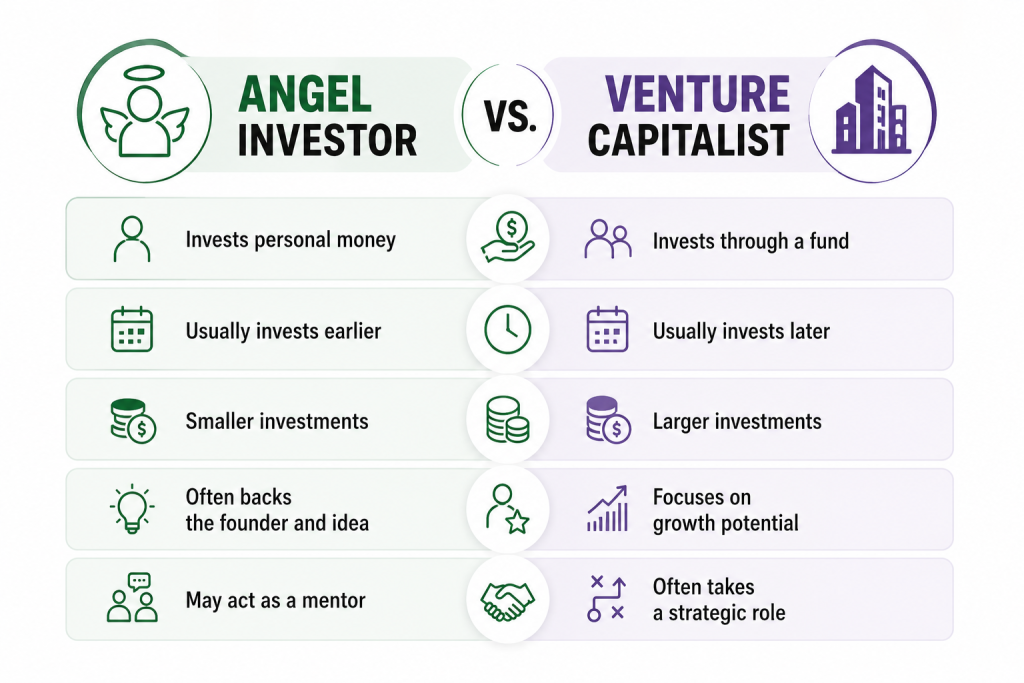
Here is a simple comparison:
Why Does This Matter?
Understanding the difference helps entrepreneurs approach the right type of investor at the right time.
A startup that is still testing an idea may be better suited for angel investment. A business that is growing quickly and needs significant funding may be ready for venture capital.
In many cases, businesses work with both. An angel investor may help a company get started, while a venture capitalist helps it scale later on.
From Learning About Investors to Becoming One
Many people assume startup investing is only for venture capital firms or wealthy individuals.
The truth is that every investor starts somewhere.
Before investing in a business, you need to understand how startups work, how opportunities are evaluated and how investment decisions are made.
That’s why investor education is so important.
The SFV Become an Investor Program is designed to help aspiring investors understand the fundamentals of startup investing and build the confidence needed to participate in the investment ecosystem.
Angel investors and venture capitalists both play an important role in helping businesses grow.
The main difference is when they invest, how much they invest, and the type of support they provide.
Whether you’re an entrepreneur looking for funding or someone interested in becoming an investor, understanding these differences is an important first step.
After all, every successful investor started by learning how the ecosystem works.