
Coworking Space vs Traditional Office: What’s Better for Growing Businesses?
At the beginning, many teams work from home or informal setups. It’s affordable and flexible, but it doesn’t always support long-term growth. As the team expands, work becomes more structured, meetings increase, and the need for a proper office environment becomes more important.
At this stage, businesses usually choose between a coworking space and a traditional office. Both provide a place to work, but they differ greatly in cost, flexibility and how they support growth.
Coworking Space: Flexible and Ready to Use
A coworking space is designed for speed and convenience.
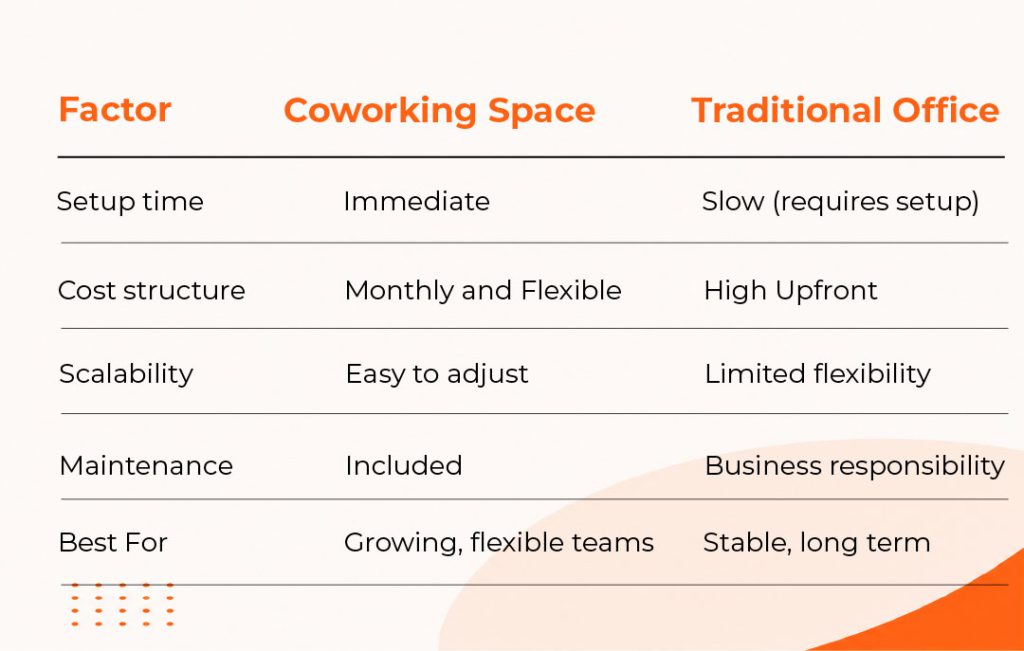
Everything is already set up from desks, internet, meeting rooms, electricity and basic office services. A business can move in and start working immediately without worrying about setup or infrastructure.
Costs are also usually paid monthly, making it easier for growing businesses to manage cash flow and avoid large upfront expenses.
Flexibility is another major advantage. If the team grows, additional desks or space can be added without disruption. If the business slows down or changes direction, it can adjust without being locked into long-term commitments.
This makes coworking spaces practical for startups and growing teams that need to stay agile.
In Kampala, for example, spaces like TechBuzz Hub reflect this model by offering ready-to-use work environments designed for small teams and entrepreneurs who want structure without the burden of managing an office.
Traditional Office: Full Control but Higher Commitment
A traditional office gives a business full control over its space, but it comes with more responsibility and upfront cost.
Before operations even begin, businesses often need to handle:
- Rent deposits
- Furniture and equipment
- Internet installation
- Electricity setup and maintenance
Most traditional offices also require long-term lease agreements, which limit flexibility.
Once set up, the office becomes fixed. If the team grows, expansion is not immediate. Businesses may need to relocate or renegotiate contracts, which takes time and adds cost.
This setup is often better suited for businesses that are already stable and have predictable long-term space requirements.
Key Differences
What Growing Businesses Should Consider
The key difference between the two is flexibility.
Growing businesses rarely stay the same size for long. Teams expand, contracts increase and operations evolve quickly. Because of this, having a workspace that can adapt becomes important.
Coworking spaces support this stage by reducing setup pressure and allowing businesses to scale without disruption. Traditional offices provide stability, but they require more planning, commitment and long-term certainty.
Both coworking spaces and traditional offices play an important role, but they serve different stages of business growth.
For growing businesses, flexibility is often more valuable than ownership or long-term control. The ability to scale quickly, manage costs easily and stay focused on operations makes coworking spaces a strong option during early and growth stages.
Traditional offices are better suited for businesses that are already stable and need long-term structure.
Ultimately, the decision comes down to one question:
Do you need flexibility to grow or stability to maintain?